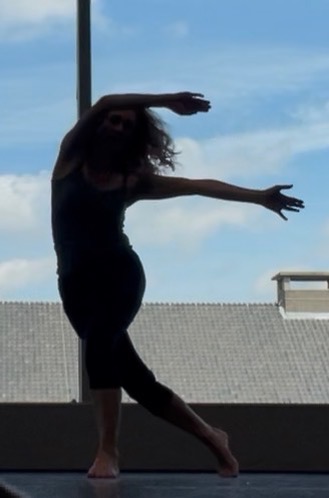
Ki in Beweging
Through movement to understanding, using the Laban Bartenieff Movement System for Shiatsu therapists
By guest lecturer Samantha Stegeman
Listening to what movement tells us
In this further training, you will become familiar with the Laban/Bartenieff Movement System.
(LBMS). This sophisticated system offers Shiatsu therapists a unique gateway to explore and understand human movement in all its facets.
Within the iokai approach, Ki is the source of all our life functions. Ki forms the bridge between our inner dynamics and our external expression. The way Ki flows, transforms, and distributes itself across the meridian network determines how we feel, how we react, and how we physically manifest. After all, meridians give movement, direction, and expression to the entire body.
Practical information

November 6 from 10:00 a.m. to 17:00 p.m.
De Ruimte, Weesperzijde, Amsterdam.
The expression of Ki in motion and meridians
Based on the four basic components of LBMS — Body, Effort, Shape en Space (BESS) — research how the different functions and qualities of Ki manifest themselves in practice. Where Ki flows freely and smoothly through the meridians, you see a natural, coordinated, and resilient movement. Where Ki stagnates, is exhausted (Kyo), or gets stuck (Jitsu), the dynamics change: movement patterns become restricted, space is used differently, and compensation or tension arises.
With LBMS, you will investigate and learn to recognize how these subtle signals can already be present before the patient is on the mat. You will develop a sharper eye for how someone enters the room, tension
organizes and takes up space. This provides valuable diagnostic information about the balance in the meridians and the current state of Ki. This allows you to make more targeted contact during the treatment, support the grounding, and help the patient release their own Ki freely.
Experience and observe for yourself
As in the iokai approach, your own experience is central. You explore the principles of LBMS by moving, feeling, and observing for yourself. You discover your own movement preferences and patterns, and from there you learn to listen to what movement has to say:
What does your own way of moving tell you about your attitude as a therapist?
What does your patient's movement tell you about their inner dynamics?
Experience from practice
“The first time I was on the mat I experienced a deep silence and relaxation. Later I discovered
How the treatment not only addressed the complaint itself, but also the entire system
brought. From that experience of connection and flow — from soft to firm, from
from inside to outside — we’ll work together on this workshop.”
What will this refresher course teach you?
After completing this refresher training, you will have a deeper understanding of motion quality and will be able to: More quickly and more precisely observe movement and movement dynamics in patients; Recognize patterns of tension, compensation, and retention of Ki before and during treatment; Better understand how Ki moves and where it is restricted in the body or in space; Support your patient’s body awareness and grounding through movement; Provide practical, targeted movement exercises for home use, so that the effect of the treatment lasts longer;
More consciously utilizing your own movement preferences within your therapeutic practice.
For whom
This refresher course has been developed specifically for graduate Shiatsu therapists (and advanced students) who want to deepen their observational skills and integrate movement into their diagnosis and treatment.
For more information about the LBMS see https://wholemovement.org/
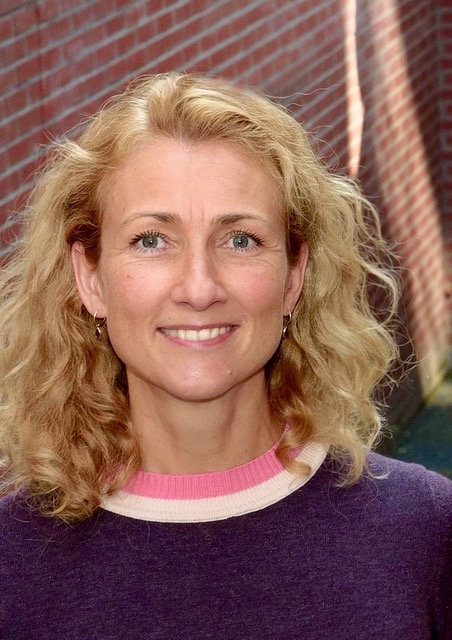
OGo to the teacher
Samantha Stegeman
Dancer, (child) exercise therapist, Laban/ Bartenieff Movement Analyst
Since I was a child, I have been fascinated by what you can do with your body Experienced en express. As a child, I was constantly running, playing, and dancing outside. I already noticed how movement can be experienced from within: the strength in your legs when you jump, the agility, the sense of control, reaction, and interaction. That physical experience and Curiosity about movement They still form the basis of how I look at people and movement.
At the age of 11, I was admitted to the Royal Conservatory in The Hague. After my studies, I worked as a professional dancer for 11 years.
By now, I have been working as a child movement therapist (Mensendieck) for over 22 years and as a Laban/Bartenieff Movement Analyst for the last 2 years.
Drawing from my background in dance, exercise therapy and Laban/Bartenieff Movement Analysis (LBMA), I view movement from different perspectives.
The strength lies in connecting these different worlds of art, education and healthcare, and making the possibilities visible and accessible, abundance of movement on a creative and research-oriented approach.
Active learning is the focus, with the Subtle interaction of inner and outer movement and of your surroundings being discovered. How this interplay shapes and influences your choices, your rhythm, and the themes of your daily life.
Costs
- € 145
- Iokai therapists and Iokai students receive a €45 discount. To do this, enter the discount code. IOKAI ALUMNI in.