Staying healthy in autumn – with the power of Ki
Some insights from Eastern medicine
Being healthy and feeling healthy means being able to adapt to what life demands of you. In the Eastern approach, including that of Shiatsu, this ability is connected to Ki, your life energy. Ki flows through everything that lives and constantly adapts to what is happening within and around us: the weather, the seasons, the people around us, the work we do.
When that adjustment goes smoothly, we feel balanced and vital.
But when our Ki gets blocked or exhausted, we notice it immediately: we become tired, tense, or sick. The trick is to become aware of our own Ki, to feel how it flows, and to learn how to strengthen and keep it moving.
What is Ki
In Japan, Ki is an obvious concept. Ki is the invisible force behind all life; it is what allows us to breathe, move, think, laugh, and feel. Without Ki, nothing happens.
The Ki is in constant interaction with our internal and external environment. As soon as we lose contact with our immediate needs, the natural energy flow is disrupted. Shiatsu and movement exercises (such as do-in) are effective in restoring that flow, so that harmony is restored between energy and consciousness.
Adapting to the seasons
We are part of nature and nature lives within us. Every time of year has its own quality of Ki. In summer it is exuberant and outward-directed. In autumn we slowly return to the inside. In winter it invites to rest and silence, and in spring everything comes to life again. When we do not allow ourselves to be part of that, staying busy in winter as we do in summer or taking on too much hay, our Ki becomes depleted. We often only see the results later: fatigue, a dip in our energy immunity or physical complaints.
Tip: Take some time to adjust each season.
Feel what your Ki needs. In the winter, rest, silence, and warm food.
In spring, movement and fresh air. In summer, lightness and space.
And in the autumn, let go of what no longer fits.
Breathing – the direct path to Ki
Breath is Ki in motion. Without breath, everything stops, literally and figuratively.
By breathing consciously, you can immediately influence how you feel, reduce stress, and feel calmer and stronger.
Exercise:
Sit upright and relax.
Place one hand on your lower abdomen, just below your navel.
Breathe in slowly through your nose and let your abdomen expand; feel your hand move with the movement. Slowly exhale through your mouth and feel the tension drain away. Do this for a few minutes a day; it helps to let Ki flow and calm your mind.
Food – nutrition as energy
Everything we eat and take into our bodies is Ki.
By eating, we make the Ki of the food – the apple or carrot, the steak or hamburger – our own Ki. The quality of what we eat, and also the way we eat it, determines the quality of the Ki that we absorb.
Fresh, seasonal food supports the natural flow of our energy. In autumn and winter, warm, cooked food helps bring our Ki into our bodies and keep it there. In spring and summer, light meals and raw vegetables provide cooling and refreshing effects.
Tip: eat with attention.
Taste, chew slowly and feel what your body needs, not what your habit prescribes.
If you get energy after eating, then you have eaten what is good for you.
If you get really tired or restless, that’s a sign to listen to and change something in your eating pattern.
Movement – Do-In. Let your energy flow
Movement ensures that Ki continues to circulate.
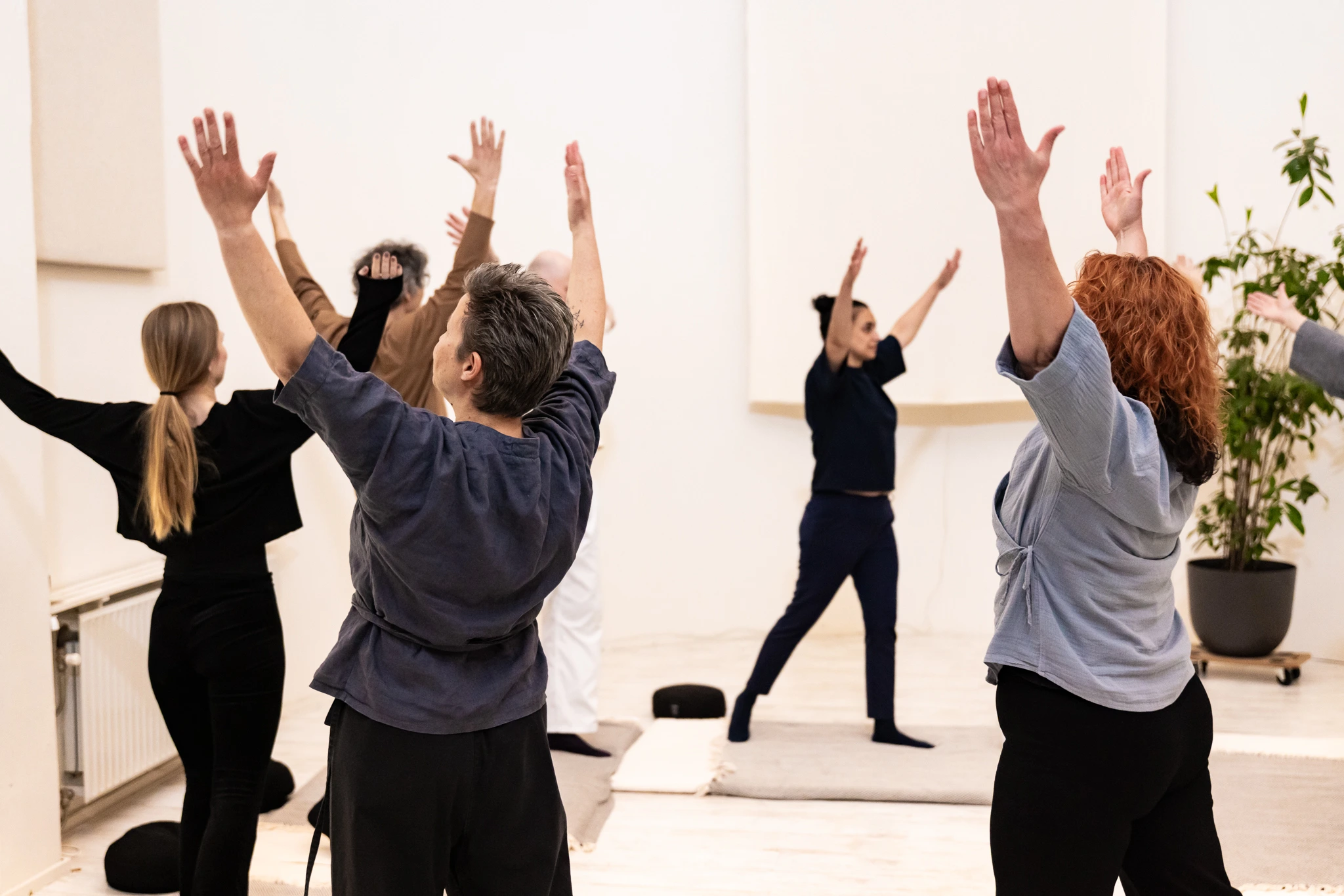
By moving, we support the free flow of energy in our body, making us feel supple and vital. Exercise doesn’t have to be intense. Instead, flowing and calm forms of movement, such as walking, Do-In, or meridian stretching, help keep the Ki moving.
Tip: Start your day with a few calm Do-In exercises or meridians stretching. For example, this exercise on YouTube. A very good exercise to stimulate your autumn energy.
Thinking and feeling
Our thoughts and feelings have a great influence on our Ki.
Ki naturally circulates freely. When we remain stuck in our minds, fixating on worries or emotions, the circulation of Ki is disrupted. On the other hand, if we can accept what is and remain open, our Ki continues to flow freely. When Ki circulates freely, we can more easily adapt to what is needed, even in stressful situations.
Exercise:
Take a moment to feel which thoughts evoke tension.
Accept that these thoughts exist.
Let them come, observe them, and let them go without holding them back.
Every time you let go, you give Ki the space to move again.
If this doesn't work right away, you can try a breathing exercise.
Breathe in three counts calmly through your nose.
Then breathe out calmly for six seconds.
Every time you breathe out, you let go of a part of your thoughts.
Do this for ten minutes.
Purpose – the direction of your Ki
Ki is what keeps our attention. What we find important and what we focus our energy on largely determines how our Ki flows. When we do something that truly suits us, we feel it immediately: we get energy, inspiration, and a sense of connection.
Meaning need not be grand or complicated. It can lie in contact with others, in creating something with your hands, or in consciously experiencing the day.
By stopping to consider what matters to you, you give direction to your Ki and support your own vitality.
Tip: think every morning when you wake up about why you get up.
What contribution do you want to make on this day to the happiness of others or of yourself?
Health according to Shiatsu
Health is not just the absence of illness, but a vibrant exchange with life itself. By listening to your Ki, your rhythm, and the seasons, you support the natural balance of body and mind, day after day.