
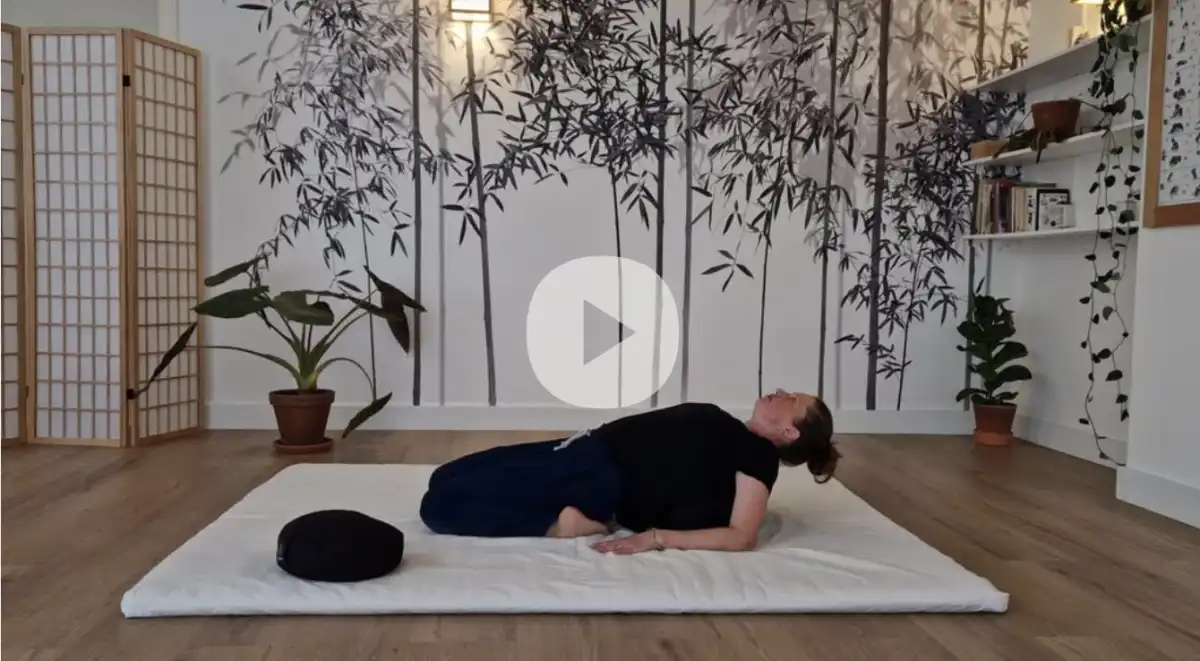
Meridian alignment as a help in the transition from winter to spring.
In our previous blog you could read about the energy of spring. This period at the end of winter is still a transitional period. A transition from the quiet winter energy to the action-oriented energy of spring. Many people are happy and joyful when spring finally arrives. It gets warmer and the daylight hours are longer. It’s wonderful to be able to go outside more. However, this period can also cause some problems. The energy in this transitional period is called earth energy. The energy that is present between the seasons. This energy is not only present outside of us, but also within us. If this energy is in balance, we can easily adapt to the changing seasons. If it is not in balance, we may develop symptoms during this period, such as fatigue and headaches. Or we simply don’t feel well in our bodies.
To support yourself during this period, you can perform meridians for the meridians associated with the Earth energy; the stomach and spleen meridians. By performing these meridians regularly, you support a smooth transition to spring and help your body stay balanced.
How do you perform the stomach and spleen meridian stretching?
For all meridians, but especially for the stomach and spleen meridians, the stretching should be held for a long time. When you feel mentally immunity ready to stop the exercise, stay in the exercise for just a little longer. That is when the Ki begins to flow!
This exercise won’t be easy for everyone. Do this exercise (and all the Do-In exercises) as it suits you best. If you experience discomfort in your lower back or knees, adjust the exercise and especially don’t go any further! Then use more props or go a little further down. Scroll to the bottom of this post for the video and instructions with pillows.
Important: This exercise is challenging for some people. Do it in a way that feels good for you. Do you experience pain in your lower back or knees? Adjust the posture, use tools or go less extreme.
Basic variant without assistive devices
Preparation
As a preparation, make sure your thigh muscles are warm. You can do various exercises for this. Start with rubbing. Do this longer if you have more stiff thigh muscles.
If you don't need any equipment, after warming up, sit on your heels. Place your hands behind your back and lean back.
Then place your forearms on the ground and lean further back. Your feet are next to your hips or possibly under your pelvic bones. Your pelvis is tilted because you extend the tailbone towards your feet.
Create space in your chest by lifting the vertebrae towards the ceiling. If it feels comfortable, you can place your arms along your head on the mat.
When you return, make sure you get back up again with the strength of your arms. With your back straight, bend forward and place your head and hands on the mat to relax your back.
Make sure you Your pelvis tilts by extending your tailbone towards your feet. This protects your lower back.
This meridian alignment can be difficult for many people. You can then adapt the exercise by placing meditation cushions behind you.
Watch the video of the stretch without any assistive devices here
Customized variant with tools
For many people, this trend intense If that is the case, you can make a customized version with tools.
If you can't sit on your heels, place a meditation cushion between your heels and your buttocks.
Next, place 1, 2, or 3 meditation cushions behind you. Make sure the cushions provide support for your upper back at the level of your shoulder blades. Do not place them too high or too low. Lean back slowly and support with your arms. If you find that you need more support, add an extra cushion.
Make sure you Your pelvis tilts by extending your tailbone towards your feet. This protects your lower back.
Watch the video of the route with the aids here
How do you feel during this meridian alignment?
The stomach and spleen meridians run along the front of the body. From your foot all the way to your torso (and your face). During this stretch, you feel a strong stretch in the front of your body. If you experience any discomfort, please remain in this position for a while! Unless you experience discomfort in your lower back. Then adjust the exercise by moving further or tilting your pelvis better.
Take the time to relax, stretch, and move with Do-In, and enjoy the positive effects it can have on your body and mind!